
Insights from the DABUS Decision in Australia and Beyond
When Machines Invent
If a machine conceives of an invention, who gets the credit under the law? Is it the coder, the company, or the code itself? This question was explored globally through Dr Stephen Thaler’s AI system ‘DABUS’, which blurred the lines around inventorship, and challenged existing legal systems built to reward human ingenuity.
Can a Machine be an Inventor?
When Dr Stephen Thaler’s AI system ‘Device for the Autonomous Bootstrapping of Unified Sentience’, or ‘DABUS’, was named as the inventor on a patent application, it sparked a series of legal cases, asking whether a machine can truly be recognised as an inventor under the law? Australia was also embroiled in this global debate, with Dr Thaler taking his case to allow DABUS to be named as an inventor on his patent applications all the way of the Full Federal Court.
In 2019, Dr Thaler filed a PCT application naming DABUS as the sole inventor. Along with several other jurisdictions, this application entered national phase in Australia as Patent Application No 2019363177 (‘the Application’), entitled ‘Food container and devices and methods for attracting enhanced attention’. The disclosed food container was purportedly conceived entirely by DABUS, heavily featuring fractal geometry in its design.

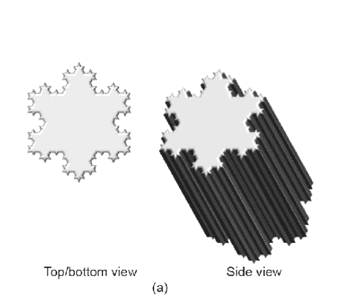
Australian Patent Application 2019363177.
Above: DABUS listed as the sole inventor on the application;
Below: A representation of the disclosed ‘invention’.
During examination of the Application, the Patent Office found that the application did not comply with the formal requirements of the Australian Patents Act 1990, kicking off a slew of cases before finding its way to the Full Federal Court.
Relevant Legislation
Interestingly, and probably requiring an amendment, neither the Australian Patents Act 1990 (‘the Act’) nor the Patents Regulations 1991 (‘the Regulations’) explicitly define the meaning of the term “inventor”. Instead, the Patent Office and the courts had to interpret the meaning of the term, by drawing upon Sections 2A and 15 of the Act, and Regulation 3.2C of the Regulations to support their interpretation.
2A Object of this Act
The object of this Act is to provide a patent system in Australia that promotes economic wellbeing through technological innovation and the transfer and dissemination of technology. In doing so, the patent system balances over time the interests of producers, owners and users of technology and the public.
15 Who may be granted a patent?
(1) Subject to this Act, a patent for an invention may only be granted to a person who:
(a) is the inventor; or
(b) would, on the grant of a patent for the invention, be entitled to have the patent assigned to the person; or
(c) derives title to the invention from the inventor or a person mentioned in paragraph (b); or
(d) is the legal representative of a deceased person mentioned in paragraph (a), (b) or (c).
3.2C Specifications—formalities check for PCT application
(1) …
(2) The applicant must:
…
(aa) provide the name of the inventor of the invention to which the application relates.
Neither Sections 2A or 15, nor Regulation 3.2C explicitly defines the meaning of the term “inventor”. Section 2A simply defines the object of the Act, without explicitly mentioning inventorship. Section 15 defines the parties who may be “granted” a patent, not the parties who are legitimate inventors on a patent application, whereas Regulation 3.2C(2)(aa) simply provides a formality requirement for the name of the inventor to be provided on incoming PCT applications.
Nevertheless, these portions of the Act and Regulations, in addition to underlying policy motivations, were used to arrive at an answer as to whether AI could be listed as an inventor on a patent application.
Patent Office Case: Stephen L. Thaler [2021] APO 5 (9 February 2021)
The central issue in this initial appeal, and in the following cases before the courts, was whether the Act and Regulations, in their absence of a clear definition of the term ‘inventor’, rendered DABUS a legitimate named inventor on an Australian patent.
To condense an otherwise long opinion, the Delegate for the Commissioner of Patents submitted the key consideration as
‘whether section 15(1) is workable in the situation where the inventor is an artificial intelligence machine’.[1]
The analysis begins with Section 15(1)(b) of the Patents Act, which requires that a patent be granted to a person who is entitled to have the patent assigned to them. Section 15(1)(c) further provides that the grantee must be entitled to the invention by devolution of title from the inventor. In practice, such devolution typically occurs through an assignment. However, since an artificial intelligence (AI) system cannot legally assign property, this pathway is effectively closed.
The examiner described this as an ‘uncontroversial observation that the law does not presently recognise the capacity of an artificial intelligence machine to assign property’.[2] The Delegate supported this conclusion, stating ‘[t]he traditional understanding is that a machine is property, and property cannot own property or enter into contracts’.[3]
Accordingly, the Delegate found that Section 15(1) could not be satisfied in the case of a non-human inventor, as there was no legal mechanism by which entitlement to the invention could vest in a person. It followed that the inventor must be a natural person, and that AI could not be validly named as an inventor under Australian patent law.
Federal Court Case: Thaler v Commissioner of Patents [2021] FCA 879
Dr Thaler, unhappy with the decision of the Patent Office, decided to appeal the decision to the Federal Court.
To condense an otherwise longer opinion, on judicial review, Justice Beach held that the Act and Regulations does not expressly refute that an AI system can be an ‘inventor’,[4] not define the term “inventor”, which must be interpreted according to its ordinary meaning which can include an artificial intelligence system.[5] He further reasons that the term ‘inventor’ should be interpreted flexibly, so as to reflect and support technological advancements consistent with Section 2A of the Act.[6]
Justice Beach further submits that the previous analysis of Section 15 was somewhat superfluous, with the application not nearing grant and therefore no entitlement of the invention needed to be considered.[7] Nevertheless, consideration was placed upon Section 15, with the position being that this section does not bar recognising AI as an inventor. Rather, it merely requires that a legal person be the grantee, and that Dr Thaler could qualify under Sections 15(1)(b) or (c) by deriving title to the invention from DABUS through ownership, control, and/or possession.[8] This derivation of title could be achieved without requiring an assignment from DABUS.[9]
In conclusion, Justice Beach was of the opinion that the name of the inventor for a patent application can be non-human,[10] and therefore, an artificial intelligence system or device.[11] As a result of this decision, Australia enjoyed a brief period of time in which AI inventorship was valid. However, this brief status-quo was immediately challenged through an appeal to the Full Federal Court.
Full Federal Court Case: Commissioner of Patents v Thaler [2022] FCAFC 62
On yet another appeal, a five-judge bench considered the statutory text and history to arrive at a conclusion to the question of whether an AI system, or more broadly, whether a non-human could be listed as an inventor on a patent application.
To condense an otherwise even longer opinion, the Full Court began with a consideration of Regulation 3.2C(2)(aa), which was considered to be a task of statutory interpretation.[12] They considered the ‘inventor’ as defined in the Regulations to be the same ‘inventor’ as defined in the Act, in particular in Section 15(1) to which entitlement to the invention must derive.[13] Accordingly, focus was once again placed onto Section 15(1). From an analysis of statutory interpretation, previous Patents Acts, underlying policy motivations, and historical precedent, the Full Court arrived, once again, to the conclusion that the term ‘inventor’ had historically, and therefore currently, refers only to ‘natural persons’.[14] Relevantly, the court provides at [106] that:
Where s 15(1)(a) provides that a patent for an invention may only be granted to “a person who is an inventor”, the reference to “a person” emphasises, in context, that this is a natural person.[15]
Because the term ‘inventor’ must be a natural person, Dr Thaler could not be entitled to grant of a patent under Sections 15(1)(b)–(d), as DABUS could not be the legal inventor.[16] This is the case even where Dr Thaler technically owns the output of DABUS.[17]
To further support their submission, the Full Court drew upon D’Arcy,[18] which stated:
‘…Despite the formulation of the claimed invention as a class of product, its substance is information embodied in arrangements of nucleotides. The information is not “made” by human action. It is discerned. That feature of the claims raises a question about how they fit within the concept of a “manner of manufacture”. As appears from s 6 of the Statute of Monopolies, an invention is something which involves “making”. It must reside in something. It may be a product. It may be a process. It may be an outcome which can be characterised, in the language of NRDC, as an “artificially created state of affairs”. Whatever it is, it must be something brought about by human action. The requirement, in each claim, that the sequence in the isolate bear specified mutations or polymorphisms raises the same problem in a particular way. Satisfaction of that integer depends upon a characteristic of the human being from whom the nucleic acid is isolated, a characteristic which is not shared by all human beings. It has nothing to do with the person who isolates the nucleic acid bearing the mutant sequence.’[19]
(emphasis added and citations omitted)
This decision by the Full Court overturned the decision of the previous Court and agreed with the opinion of the Deputy Commissioner representing the Australian Patent Office.[20]
In response to the Full Court decision, Dr Thaler requested for special leave to appeal the decision of the Full Federal Court, which was ultimately denied.[21] As such, in Australia, and really everywhere else in the world, inventors are not able to be non-human beings, including artificial intelligence systems. The Full Court has acknowledged that, although their decision disallows for AI systems to be considered inventors under Australian Law, there are several questions and issues which must be clearly set out and mandated by parliament. The issues at the intersection of artificial intelligence and intellectual property are new, and existing law is ill-equipped to handle future potential issues.
These further questions, as also identified by the Full Court, include[22]:
- Should policy be revised to allow for non-human inventors?
- If not, who should a patent be granted to in respect of its output?
- Does the standard of inventive step need to be recalibrated to account for advancements in artificial intelligence?
- And more broadly, what is the current state of the inventive step test when considering that artificial intelligence may have contributed to the invention?
Present Australian Patent Office Practice
The Australian Patent Office, as outlined in Section 5.4.3 of the Patent Manual of Practice and Procedure, presently follows the decision of the Full Court in assessing AI-inventorship. As succinctly stated, their present position is that”
‘The word “inventor”, meaning ‘”someone who invents”, has long been considered to refer to a natural person … This is distinct from legal persons such as corporations and bodies politic, which can be named as applicant but cannot be listed as inventors for the purposes of the Act.
…
Thus … Any inclusion of a non-human as an inventor in a patent application will contravene the Act (and fail to comply with formality requirements).’
Thaler Cases Internationally
Unfortunately, Dr Thaler seemingly met the same conclusion simultaneously in multiple different jurisdictions, with the term ‘inventor’ considered to refer to as a natural person, and therefore, not an artificial intelligence system. A brief summary of the Thaler decisions internationally is provided below.
New Zealand
In Thaler v Commissioner of Patents,[23] the High Court of New Zealand dismissed Dr Stephen Thaler’s appeal on 17 March 2023, upholding the Assistant Commissioner of Patents’ decision that only a natural person can be recognised as an inventor under the Patents Act 2013 (Thaler v Commissioner of Patents [2023] NZHC 554).
The High Court examined sections 9, 177, 189–193 to draw inference from legislation as to whether an inventor must constitute a natural person.[24] Specifically:
- Section 9 refers to “the inventor” and “any other person” in the context of disregarding disclosures during the grace period;
- Section 177 uses similar language when outlining the Court’s powers in certain applications; and
- Sections 189 to 193 concern requests or claims to be mentioned as an inventor, clearly assuming that inventors are individuals.
For example, at [28] the High Court states that:
Section 9 refers to “the inventor” and to “any other person” for the purposes of disregarding disclosure of matter constituting an invention.
The above implies that section 9 is more easily interpreted if inventors are persons, but the High Court found that this is not definitive under the law, stating that:
These sections sit more easily with inventors who are persons. But strictly speaking, those sections do not necessarily have to apply to all inventors. It is not clear that ordinary usage of language envisages an AI to have an address, as required by reg 50(1)(b)(iv) … But neither is it clear there is yet much “ordinary usage” of language in relation to AI.
In arriving at their decision, the Court turned to legislative intent rather than the strict letter of the law. The Court examined the historical development of New Zealand’s patent legislation, from the Patents Act 1860 through to the current Patents Act 2013. It concluded that for more than 160 years, the legislative framework has consistently assumed that an inventor must be a natural person. Notably, while the Patents Act 1953 did not define ‘inventor’, it repeatedly referred to the inventor as a “person” and, in outdated language, as “him”. The High Court succinctly states that:
In New Zealand, the Patents Act 2013 (the 2013 Act) was passed when AI was known … The legal issue depends on the purpose of Parliament in passing the 2013 Act. There is nothing in the legislative history to indicate Parliament intended to open up the possibility of an AI being an inventor under the 2013 Act… Given that clear purpose, I do not consider it is appropriate for the courts to effectively expand the definition of inventor. Such a step is more appropriately reserved, in our constitution, for Parliament.[25]
This places New Zealand in the same position as Australia, and from below, other major jurisdictions when it comes to artificial intelligence as patent inventors. Nevertheless, the High Court has left the issue open for their respective governments to ultimately decide.
United States
Dr Stephen Thaler filed two U.S. patent applications for inventions generated by his AI system DABUS, listing DABUS as the sole inventor. The USPTO rejected the applications on the ground that U.S. patent law requires inventors to be natural persons,[26] resulting in Thaler appealing this decision. On 2 September 2021, the Judge of the Eastern District of Virginia granted summary judgment for the USPTO. She held that the Patent Act defines “inventor” as “the individual,” and under the Dictionary Act an “individual” means a human being; the court also noted that the statute requires inventors to submit an oath using personal pronouns such as “himself” or “herself,” confirming that only natural persons can be inventors.[27] Policy arguments urging recognition of AI inventors were dismissed as matters for Congress rather than the courts.
Thaler appealed, but the Federal Circuit unanimously affirmed. Judge Moore wrote that the Patent Act’s definition of “inventor” as an “individual” unambiguously refers to a natural person and that the Act consistently uses personal pronouns when describing inventors, underscoring that machines cannot be inventors (Thaler v Vidal [2022] 43 F.4th 1207 at 1220–1221).[28] The court rejected Thaler’s argument that AI should be recognised as inventors and held there was no statutory basis to depart from the ordinary meaning of “individual”. The U.S. Supreme Court denied a review on 24 April 2023, leaving the Federal Circuit’s decision intact, so under current U.S. law only human inventors may be named on patent applications.
United Kingdom
Dr Stephen Thaler filed two UK patent applications naming his AI system DABUS as the inventor. The UKIPO rejected them because the Patents Act 1977 requires a human inventor;[29] the High Court and a majority of the Court of Appeal upheld that view, holding that only a natural person can be an inventor and that Thaler could not derive rights simply by owning the machine.[30] Birss LJ dissented, suggesting Thaler might own the invention through accession, but the majority disagreed.
Thaler’s final appeal to the Supreme Court also failed. The court confirmed that sections 7 and 13 of the Patents Act form a complete code for entitlement to a patent and that only a person can be an inventor. Since DABUS is not a person and cannot confer rights, Thaler had no entitlement and his applications were deemed withdrawn.[31]
Europe
Dr Stephen Thaler filed two European patent applications designating his AI system DABUS as the inventor. In January 2020 the European Patent Office’s Receiving Section refused to accept these applications because the European Patent Convention requires the inventor to be a natural person; a machine cannot be named, and DABUS lacked the legal capacity to transfer rights.[32] The section also held that Thaler could not rely on his ownership of the AI to derive title to the inventions.
Thaler appealed to the Legal Board of Appeal. In its December 2021 decision the Board dismissed both appeals, confirming that the EPC recognises only a human inventor and that the designation of inventorship must state a person’s name and address.[33] The Board held that statements of entitlement must reflect a transfer from a natural person and refused to refer the case to the Enlarged Board of Appeal, making its decision final. Consequently, the EPO’s position is that AI systems cannot be inventors and cannot confer rights in their outputs.
Conclusion
The DABUS decision has confirmed that, under current law, an “inventor” must be a natural person, and AI systems cannot be recognised as inventors. As AI becomes increasingly creative, tensions will grow between legal frameworks and technological reality. Whether reforms should allow non-human inventors, adjust entitlement rules, or revisit the inventive step standard is a matter for legislators.
For Further Information
If you would like to make an inquiry into protecting your own technologies, please contact Wrays or the authors of this article. Our team can assist with patent strategy, filings, and portfolio management tailored to the technology sectors.
[1] Stephen L. Thaler [2021] APO 5 (9 February 2021), [26].
[2] Ibid.
[3] Ibid n 18.
[4] Thaler v Commissioner of Patents [2021] FCA 879, [118].
[5] Ibid [120].
[6] Ibid [122]–[126].
[7] Ibid [157]–[159].
[8] Ibid [193].
[9] Ibid [189].
[10] Ibid [222].
[11] Ibid [226].
[12] Commissioner of Patents v Thaler [2022] FCAFC 62, [82].
[13] Ibid [84].
[14] Ibid [105].
[15] Ibid [106].
[16] Ibid [112].
[17] Ibid.
[18] D’Arcy v Myriad Genetics Inc [2015] HCA 35.
[19] Ibid [6].
[20] Commissioner of Patents v Thaler [2022] FCAFC 62, [117].
[21] Thaler v Commissioner of Patents [2022] HCATrans 199 (11 November 2022).
[22] Ibid, [119].
[23] Thaler v Commissioner of Patents [2023] NZHC 554.
[24] Ibid, [28]–[34].
[25] Ibid, [2].
[26] In re Application of Application No.: 16/524,350 (USPTO, 17 February 2020)
[27] Thaler v Hirshfeld, No. 1:20-cv-903, 2021 WL 3934803
[28] Thaler v Vidal [2022] 43 F.4th 1207 (Fed. Cir. 2022).
[29] Patent Decision, BL Number O/741/19 (UKIPO, 4 December 2019).
[30] Thaler v Comptroller‑General of Patents [2021] EWCA Civ 1374.
[31] Thaler v Comptroller‑General of Patents [2023] UKSC 49.
[32] Designation of inventor/DABUS, Case J 8/20, Decision of the Receiving Section of the European Patent Office, 27 January 2020.
[33] J 0008/20 (Designation of inventor/DABUS) (EPO, 21 December 2021).